Your Home Builder Sales Pipeline Is Losing You Buyers
Most home builders don't have a sales pipeline. They have a list of names in a spreadsheet, a few sticky notes on a monitor, and a mental model of who's "serious" and who's "just looking." That's not a pipeline — that's how you lose buyers before they ever write a contract.
The residential new home sales cycle is long — anywhere from 30 days to 18 months from first contact to close. A lot can happen in that window. Buyers get cold feet. Life changes. A competitor opens a community three miles away. If you're not actively managing where every prospect stands, you're not losing them to bad luck. You're losing them to neglect.
The problem with "staying in touch"
Ask most home builders how they follow up with prospects and you'll hear some version of: "We reach out when we have something to tell them." That sounds reasonable. It isn't.
Buyers who are six months out from a decision still need to feel connected to your brand, your community, and your process. Silence reads as disorganization — or worse, disinterest. Meanwhile, your competitors are calling them monthly, sending construction updates on their model home, and dropping community event invites into their inbox.
Without a structured pipeline, follow-up happens when someone remembers to do it. The hot prospects get attention. The warm ones drift. And the cold ones — who might have become buyers if you'd stayed visible — vanish entirely.
What a real new home sales pipeline looks like
A functional pipeline for home builders isn't a CRM full of fields nobody fills out. It's a clear, stage-based view of every prospect in your funnel — where they are, what the last interaction was, and what needs to happen next.
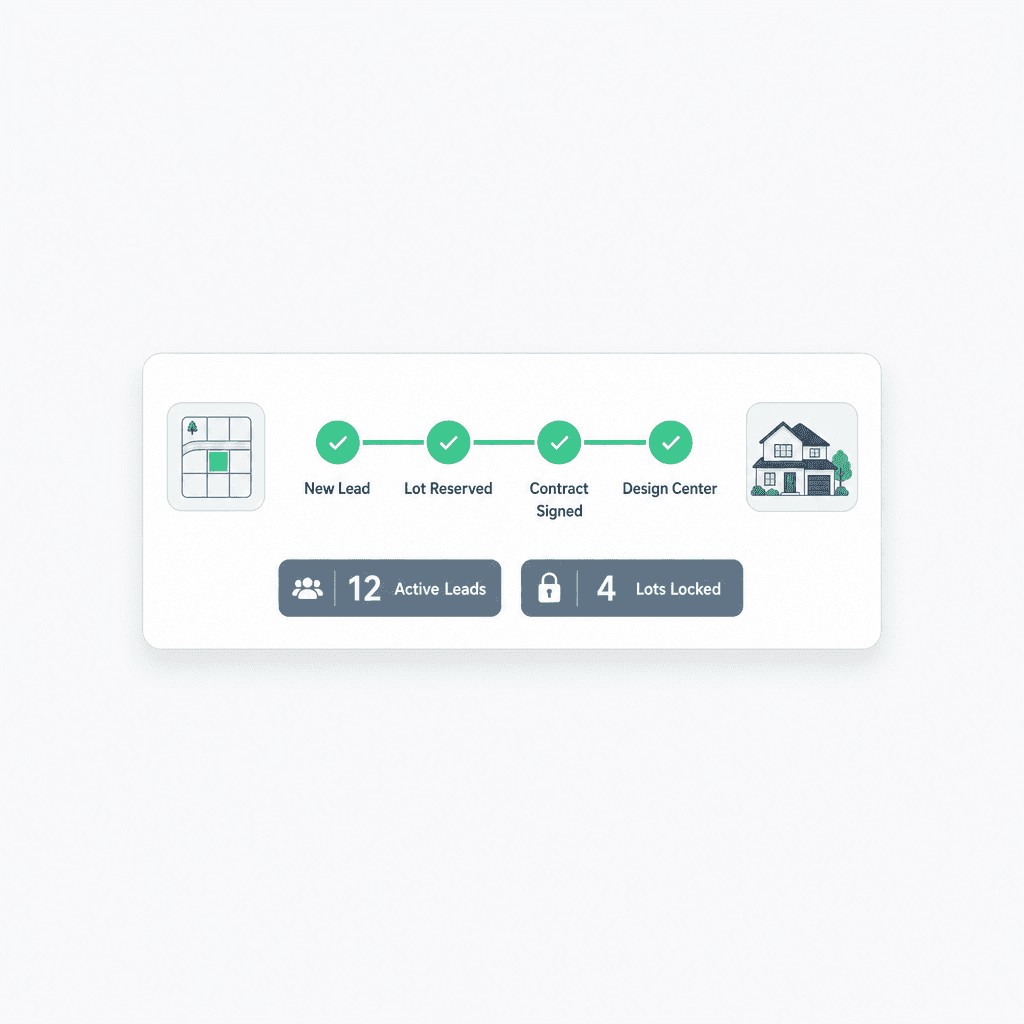
For a typical home builder, the stages look something like this:
Initial inquiry
First contact — a web form, a model home visit, a referral. The prospect has expressed interest but you know almost nothing about them. Your job here is qualification: timeline, budget range, lot preference, financing status.
Qualified prospect
You've had a real conversation. They have a realistic timeline (12 months or less), they're pre-approved or close to it, and they're genuinely interested in your product. This is where active nurture begins.
Lot selected / design meeting scheduled
They've picked a lot or a plan, or they've agreed to a design center walkthrough. This is a high-intent signal — move fast. Every day of delay at this stage risks a change of heart.
Contract pending
Negotiating price, options, and terms. The contract isn't signed yet. This is where deals die from slow responses and unclear next steps.
Under contract
Signed. Now the build process begins — and your sales job transitions to keeping them informed and excited through a 6–12 month build cycle.
The follow-up cadence that actually converts
Different pipeline stages require different follow-up rhythms. An initial inquiry needs a response within hours — not days. A qualified prospect six months from their target close date needs a touchpoint every two to three weeks, not daily calls that push them away.
The builders who consistently convert warm prospects into signed contracts aren't working harder — they're working systematically. They have reminders that surface the right name at the right time. They know the last thing that was said to every prospect. They don't rely on memory to manage a 40-person funnel.
A good rule of thumb: if a prospect hasn't heard from you in three weeks and hasn't moved backward in the pipeline, that's a gap. Automated reminders tied to prospect stage close that gap without requiring a sales manager to manually audit the list every Friday.
Where the sales pipeline meets the build process
Here's where home builder sales gets complicated in a way that no generic CRM handles well: your pipeline doesn't end at contract signing. It transforms.
Once a buyer is under contract, they become part of your production schedule. They have a lot, a plan, a design selection appointment, a permit timeline, and a projected close date. All of that information needs to flow from sales into operations — without being re-entered by hand, without living in a separate system, and without falling through the cracks during the handoff.
Builders who run sales and construction in separate tools lose buyers during that transition. Updates don't get shared. Design changes don't make it to the superintendent. Buyers start calling to ask questions that nobody can answer because the answer is in a different system nobody on the call has open.
How Cornerstone PM™ connects sales to production
Cornerstone PM™'s sales pipeline is built for how home builders actually sell — with lot assignments, plan selections, and buyer information connected directly to the production side of the platform. When a buyer moves from "contract pending" to "under contract," their lot is already in the build schedule. Their design selections are already in the purchasing module. The handoff is automatic because there's nothing to hand off — it's all one system.
The result: fewer surprises, faster response times, and buyers who feel like someone is actually watching out for them — from the day they walk into your model home to the day they get their keys.
Stop managing buyers in your head
If you're closing 10 homes a year, you can probably hold your pipeline in your head. If you're trying to close 20, 30, or 50 — or if you have a sales agent handling prospects while you're running the build — you can't. The pipeline has to live somewhere visible, stageable, and actionable.
The builders who grow fastest aren't the ones who are best at selling. They're the ones who never let a warm lead go cold because nobody remembered to call.
See how Cornerstone PM™ manages your sales pipeline from first inquiry to close
Join the beta — free for 2 years for early adopters.
Get Beta Access