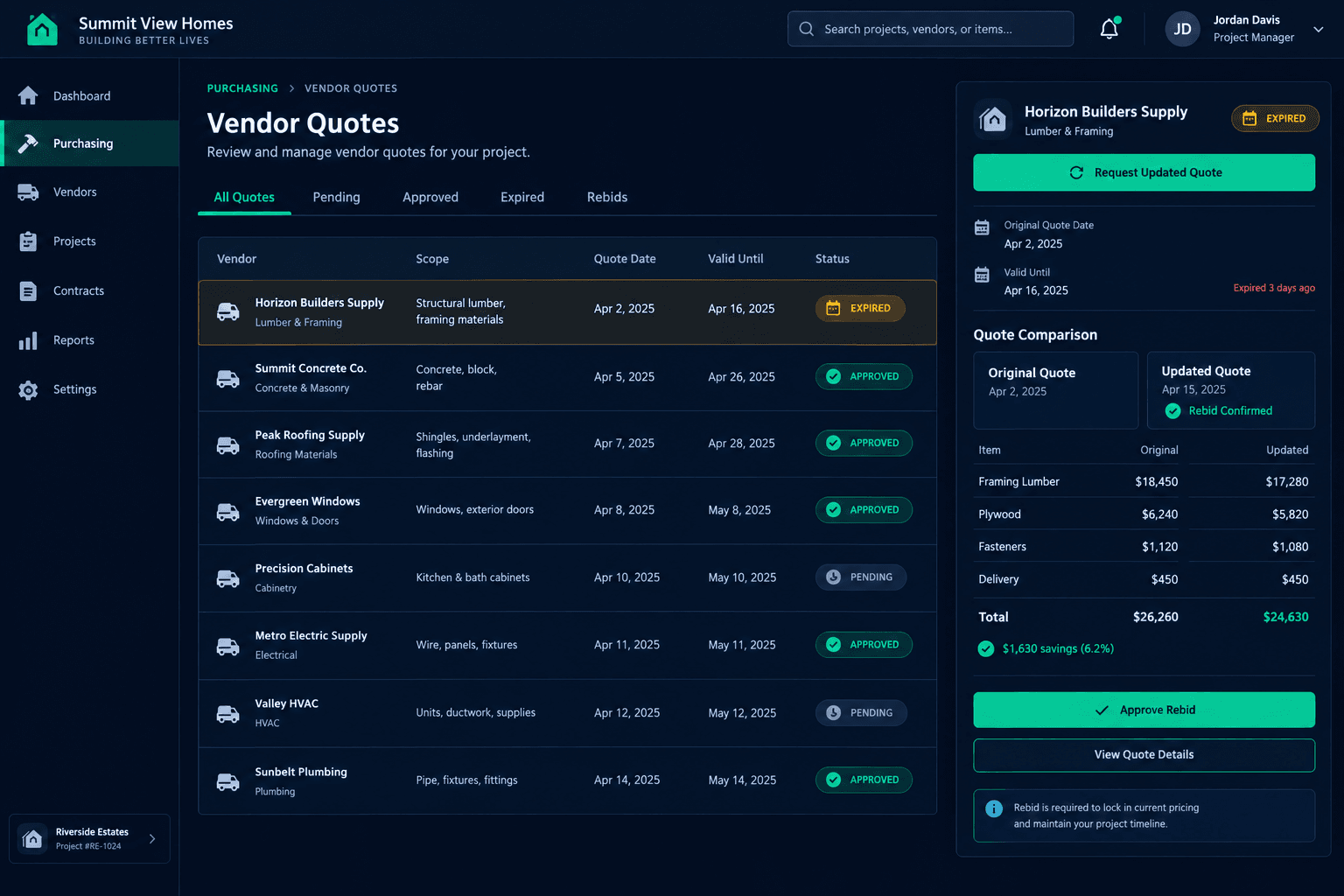
The Quote Expired Before the Home Started: A Builder's Rebid Checklist
When a home's start date slips past a vendor quote's validity window, don't assume the old price still holds. Reconfirm validity with the vendor, request an updated quote on the same scope, check what changed, and review existing purchasing commitments before you accept new pricing.
Vendor quotes carry a validity window for a reason — material costs move. A home that was supposed to start in March but breaks ground in July is starting with pricing that may no longer be real. The fix isn't complicated, but skipping it means a budget built on numbers nobody actually agreed to anymore.
How do you know a quote has actually expired?
Check the vendor's stated validity window against the home's planned start date, not the date the bid was originally awarded. A quote accepted six months ago with a 30-day window expired long before anyone noticed if the schedule slipped. Cornerstone records the quote date and terms on the accepted bid, so the comparison takes seconds — but the check itself is still on your team, because there is no automatic expiry monitoring watching every home for you.
Ask before you assume
Some vendors will honor a recently expired quote for a short grace period. A direct question is faster than a rebid nobody needed.
Requote the same scope
Send the identical scope-filtered bid template back so the new number lines up item for item with the original.
What should the rebid request actually ask for?
Resend the same scope-filtered bid template the vendor originally quoted from, rather than a fresh request that might drift in scope. When a bid comes back, don't just compare totals — compare exclusions and line items against the original quote. A vendor requoting after several months can quietly narrow what's included, and a lower headline number can hide a scope that shrank along with it. Side-by-side comparison against the original accepted bid is the fastest way to catch that before it becomes a change order later.
What existing commitments need a second look?
Before you accept the rebid, check whether a purchase order or budget line already reflects the old price. If a PO was drafted against the expired quote, decide whether it needs to be revised or reissued once the new pricing is accepted — Cornerstone does not retroactively reprice an issued purchase order on its own. Treat the previously accepted pricing as useful context for the conversation with the vendor, not as proof they'll match it on a home that's starting later than planned.
An old accepted price is not a promise
Cornerstone has no automatic rebid or expiry-monitoring feature. The recorded price is history, not a commitment the vendor is bound to on a later start date.
Once the vendor reconfirms, what changes in the system?
Update the accepted pricing on the home so the budget and any related purchase order reflect the number that will actually be billed. This is also the moment to confirm the vendor still holds the community-assigned award for that scope — a long delay is a reasonable point to check in, not just on price but on whether the original vendor relationship still makes sense for that community.
A slipped start date is common. Pricing that quietly ages out of validity and gets carried forward unchecked is the avoidable part. For more on keeping vendor records and bid pricing current, see the purchasing hub.
Keep vendor pricing tied to real commitments
Cornerstone PM keeps quote dates, accepted pricing, and purchase orders linked, so a stale quote is easy to spot before it reaches a home's budget.
Request Early Access