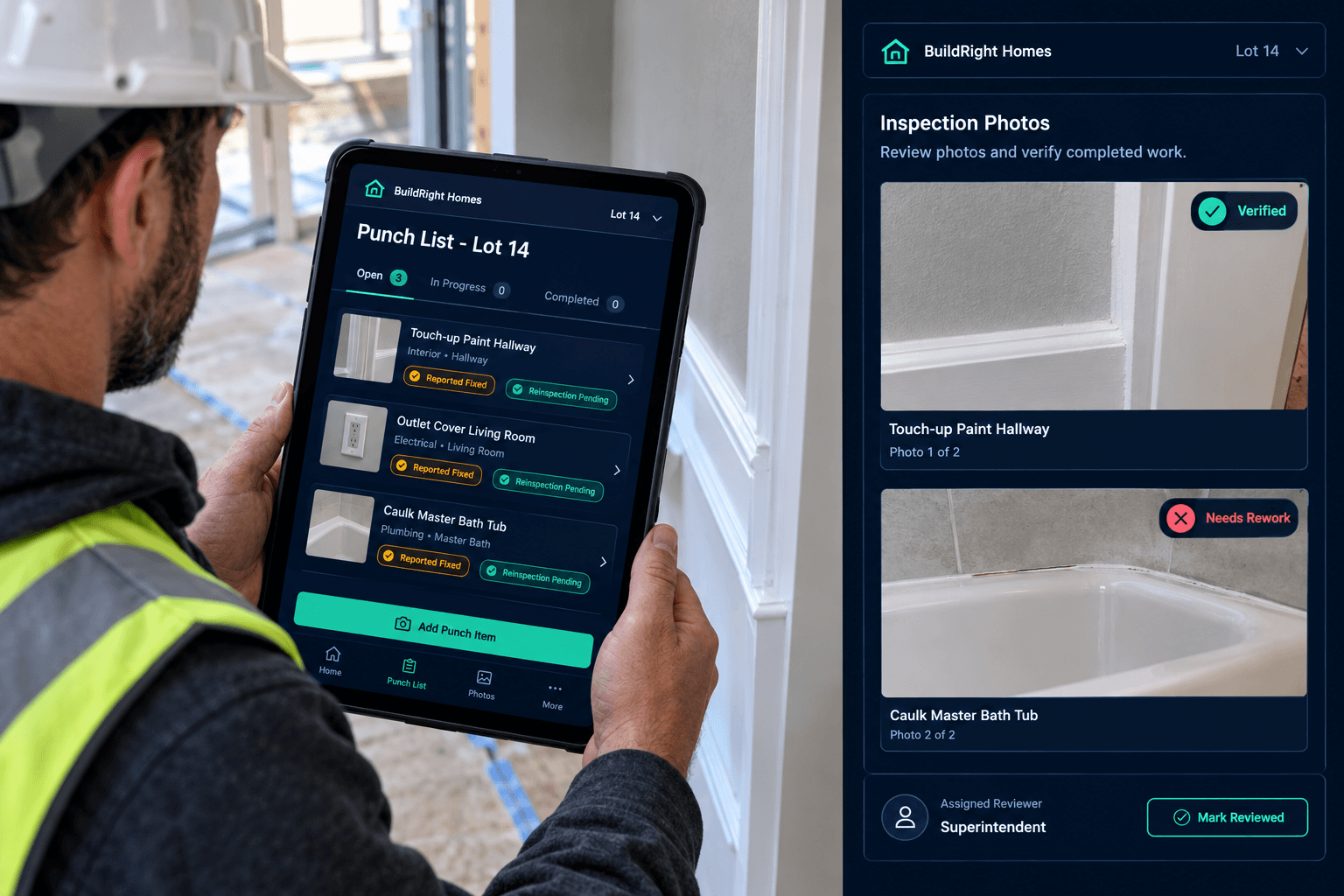
The Trade Says It Is Fixed: Close the Punch-List Reinspection Loop
A trade's message or photo saying a punch-list item is fixed isn't the same as it being closed — assign a reviewer, walk the repair in the field, log the outcome, and route anything that fails back out before you schedule the final handoff.
Punch lists are easy to generate and easy to lose track of once they're open. The gap that causes the most rework isn't writing the list — it's the handoff between a trade reporting a fix and someone actually confirming it in the field. A text that says "handled" or a photo attached to a message is a report, not a resolution. Treating it as closed without a human reviewing the actual repair is how an unresolved item resurfaces at the final walkthrough, or worse, after the buyer has moved in.
What the reinspection checks
Reported fix
The specific item, location, and what the trade says was done
Assigned reviewer
The named person responsible for the field reinspection
Field verification
An in-person check against the original punch-list note
Reinspection outcome
Passed, needs more work, or needs a different trade — with a note
Full-list status
Every item reviewed and closed before the final walkthrough
Why doesn't a trade's "done" message close the item?
A completion message tells you the trade believes the work is finished — it doesn't tell you whether the repair actually matches what the punch-list note described. A touch-up paint job might cover a blemish without addressing the underlying crack. A "repaired" outlet might work but still have an exposed gap around the cover plate. The trade isn't necessarily wrong or acting in bad faith; they're reporting their own work, which is a different thing than an independent check against the original standard. That gap is exactly what a reinspection step is for.
Who should own the field reinspection?
Name a specific person — typically the superintendent or a qualified field lead — rather than leaving reinspection as a shared, unassigned responsibility. An item with no named reviewer tends to sit in limbo: the trade considers it done, nobody on the builder's side has confirmed it, and it only gets caught if someone happens to notice during an unrelated site visit. Assigning the reviewer at the moment the trade reports the fix keeps the item moving instead of stalling between two parties who both assume someone else is handling it.
A photo is not a substitute for a field walk
Photos help document a repair, but they can't show texture, fit, or whether a fix addresses the root cause rather than the visible symptom. Foreman can help prepare punch lists and analyze supplied photos, but a qualified person still has to walk the actual repair before the item is marked closed — the AI doesn't certify workmanship.
What should the reinspection record?
Beyond a pass/fail mark, record the location, the original punch-list note, and what the reviewer actually found — including a reason if the item doesn't pass. That context matters the next time this trade is on-site or if the same issue type shows up on another home. Cornerstone's home schedules give the team a shared place to keep that reference — the location, the reported fix, the responsible reviewer, and the planned revisit — without asserting a dedicated punch-list field or module exists. The goal is a common coordination record the superintendent, trade, and office can all see the same way, not a new system of record replacing the field inspection itself.
What happens when the reinspection fails?
Send the item back out with the specific reason it didn't pass — not a generic "redo." If the issue points to a different trade (a paint touch-up that's actually hiding a drywall crack, for example), route it to the trade that can actually fix the root cause rather than sending it back to the one that already tried once. Leaving a failed reinspection ambiguous is how the same item bounces between trades two or three times before anyone identifies what's actually wrong.
What has to be true before scheduling the final handoff?
Every punch-list item should show a reviewed, closed status from an actual field check — not a trade's unverified completion message sitting unconfirmed. Scheduling the final walkthrough or buyer handoff before that's true risks surfacing an unresolved item in front of the buyer instead of catching it internally. The reinspection loop exists precisely to make sure that gap gets closed before the home does, not after.
None of this requires new software to enforce — it requires a consistent habit: report, assign, inspect, record, and only then close. Cornerstone's connected home schedules and Foreman's photo-analysis support make that habit easier to keep across every open item on every active home, but the actual verification stays a human decision, made by someone who walked the repair.
Keep every open item visible until it's actually closed.
Cornerstone keeps home schedules and field coordination in one place, so a reinspection loop doesn't depend on a message thread nobody double-checks.
Request Early Access