Rain Changed the Plan: Give Each Trade a Clear Next-Step Update
A rained-out start date only becomes a problem when the update doesn't reach every trade it touches. Confirm the site is actually ready, trace every successor on the linked schedule, check deliveries against the new dates, and send one consistent update — then confirm each trade actually got it.
Weather delays are routine. What separates a clean recovery from a week of confused crews showing up to a muddy lot isn't the rain — it's whether the revised dates reach the right people, in the right order, with someone confirming they landed.
Who decides the site is actually ready again?
Rain stopping and a site being workable are two different things. The field lead needs to walk the lot — or the specific work area — and confirm ground conditions, slab cure time, or drainage actually support the next task starting. Cornerstone doesn't make that call automatically; there's no weather feed triggering a schedule change on its own. A human confirms readiness first, every time.
Confirm readiness before anything else moves
A dry sky doesn't mean a dry site. Someone on the ground confirms the work area, not the forecast.
Check deliveries before they arrive
A delivery tied to the old start date can show up with nowhere ready to receive it — confirm it moved with the schedule.
How do you find every trade a delay actually touches?
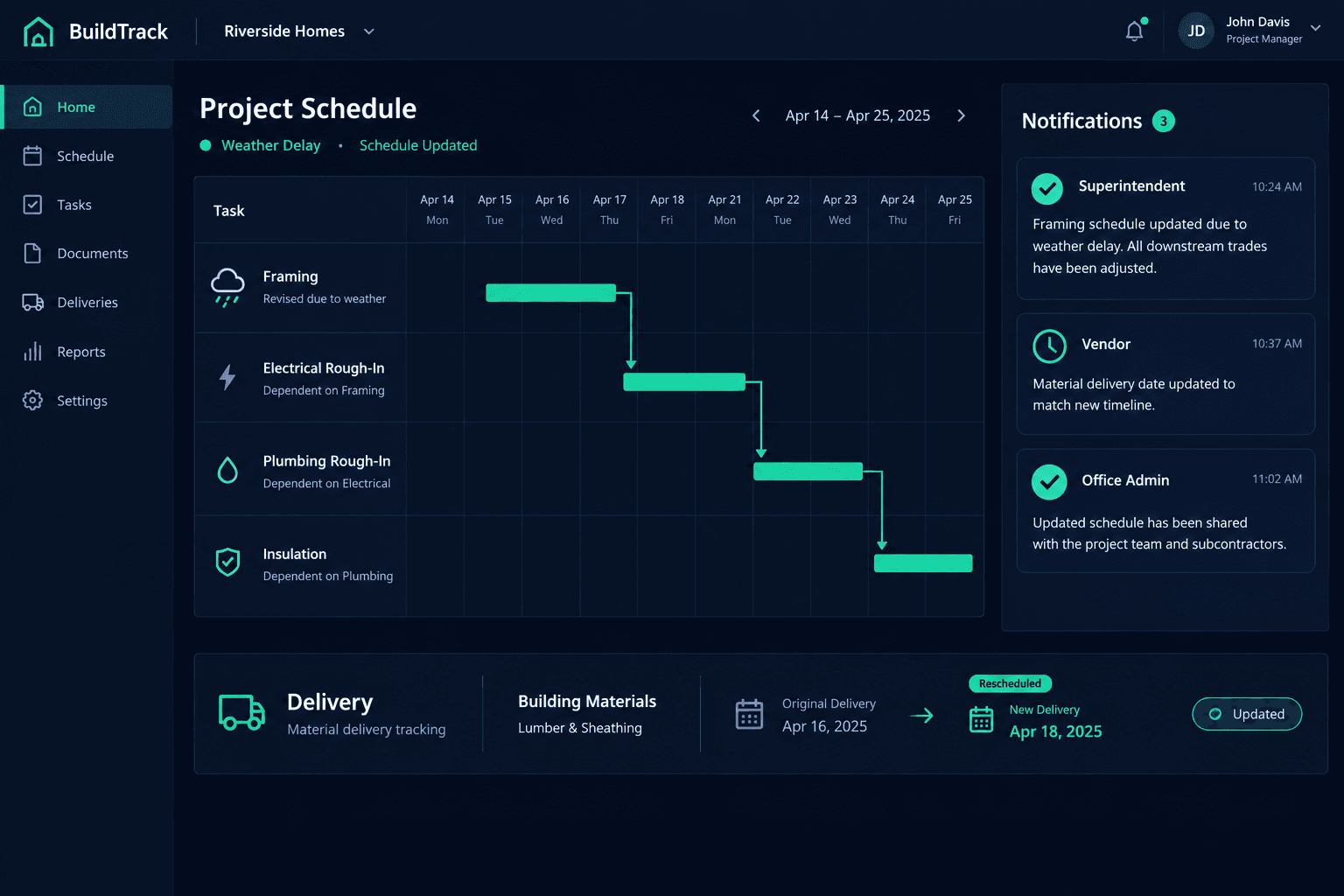
Pull up the home's schedule and look past the next trade in line. Cornerstone's linked home schedules and cascade scheduling show every task that depends on the delayed one, so a framing delay doesn't just flag the framer — it surfaces electrical rough-in, plumbing rough-in, and insulation, all of which were waiting on framing to finish. Missing one of those successor trades is how a single rain delay turns into three separate scheduling surprises over the following two weeks.
What happens to deliveries that were already scheduled?
Material deliveries don't automatically track a schedule change. If a delivery was set for the original start date, it can still show up on that date even though the task it supports has moved. Someone needs to check deliveries against the revised schedule and push back any that no longer line up — before a truck shows up to a site with no crew ready and nowhere dry to stage the material.
Why does one consistent update matter more than a fast one?
Once readiness is confirmed and successor impacts are mapped, the office sends the revised dates through role-based notification preferences. A superintendent, a vendor, and an office admin can each get the update through the channel that fits their role, but everyone is working from the same revised dates. A fast update sent to only one or two trades just moves the confusion downstream instead of resolving it.
Sending the update isn't the same as confirming it
Cornerstone doesn't treat a notification as proof a trade accepted the new date. A sent alert and a confirmed commitment are two different states — only one of them means the trade will actually show up.
Who should confirm each trade actually got the message?
Name one owner — usually the superintendent or project manager — responsible for following up with each affected vendor individually after the update goes out. That follow-up is what turns a sent notification into a confirmed commitment. Without it, you're only as sure of your schedule as the last notification that was read, not the last trade that actually agreed to the new date.
For more on how linked schedules and cascade updates keep a home's purchasing and field timelines in sync, see the construction hub.
A weather delay is routine — a confused crew doesn't have to be
Confirming readiness, tracing successor trades, checking deliveries, and sending one consistent update covers the mechanics. The step that actually prevents a no-show is naming someone to confirm each trade got the message and can make the new date — because a sent update and a confirmed trade are not the same thing.
Keep every trade on the same revised schedule
Cornerstone PM links home schedules and routes updates by role, so a weather delay reaches every affected trade — consistently, not one confused phone call at a time.
Request Early Access